- Hydro jetting cleans buildup from inside drain and sewer pipes with pressurized water.
- A camera inspection can help reveal whether buildup, roots, or pipe damage is causing the trouble.
- The method may help remove grease, sludge, mineral scale, loose debris, and some root intrusion.
- Hydro jetting is not a repair for broken, collapsed, or badly displaced piping.
- Cost depends on access, pipe condition, the severity of the blockage, and whether inspection or repair is needed.
- Proper nozzle selection and pressure control are essential for safe, effective cleaning.
When drains repeatedly slow down, or a sewer line backs up more than once, the problem may be buildup along the pipe walls rather than a single, simple clog. Hydro jetting is a professional pipe-cleaning method that uses controlled, high-pressure water to break up and flush away debris inside drain and sewer lines. It can be useful for certain recurring blockages, but it is not a universal fix. The best decision starts with identifying what is in the pipe and whether the pipe itself is still structurally sound. A cleaning method cannot repair a collapsed line, an open joint, or a severely damaged pipe.
Why Recurring Clogs Need More Than a Quick Fix
A plunger or drain snake can restore flow by clearing a clog. That may be enough for a nearby obstruction, such as hair in a bathroom drain. However, a main sewer line can gradually narrow when grease, soap residue, scale, sludge, silt, or roots collect inside it. Clearing a small opening through that material may not remove the buildup that caused the restriction. Pay attention when several drains slow at the same time, toilets gurgle, sewer odors appear, water backs up at a low fixture, or a clog returns within weeks. These symptoms do not prove one specific cause, but they are good reasons to request a professional diagnosis of the drainage system rather than repeatedly treating each fixture separately.
What Hydro Jetting Does Inside a Pipe
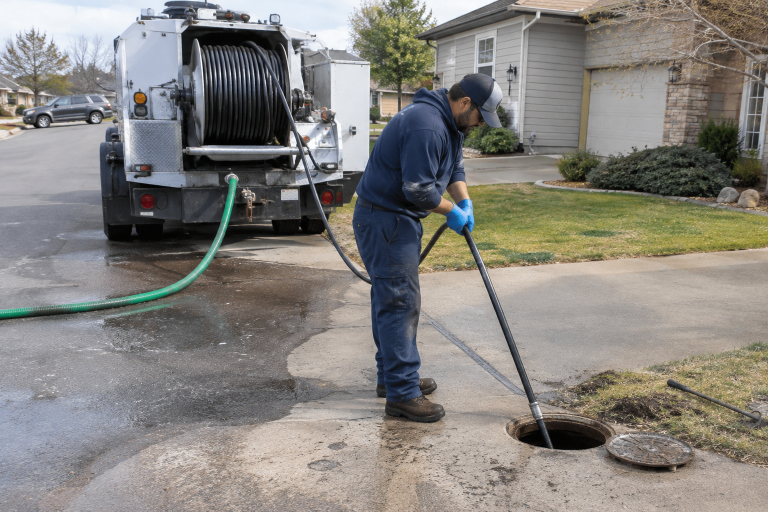
Hydro jetting uses a pump, flexible hose, and specialized nozzle to direct water through a pipe. Depending on the nozzle, water can be aimed forward to help penetrate material, backward to pull the hose through the line, or outward to scour deposits from the pipe walls. The goal is usually more thorough cleaning than simply punching a narrow hole through a blockage. Settings should be matched to the pipe’s diameter, material, condition, and the material being removed. Professional sewer-maintenance crews illustrate why this matters. For example, nozzles are changed as needed for the sewer main’s history and cleaning conditions, rather than treating every line with the same equipment setup.
How the Service Usually Works
- Review the symptoms. The technician asks when the issue began, which fixtures are affected, and whether backups have occurred.
- Locate an access point. A cleanout is often the preferred entry point, although another suitable drain access point may be used when appropriate.
- Inspect the line. A camera may show grease accumulation, roots, cracks, offsets, or a collapsed section.
- Select the equipment. The technician chooses a nozzle and water setting suited to the line and obstruction.
- Clean the pipe. The hose is advanced through the line as water loosens material and moves it toward removal or downstream flow.
- Verify the outcome. A follow-up camera check can help confirm that flow has been restored and reveal damage that cleaning did not address.
Common Problems Hydro Jetting May Help With
This method may be appropriate for heavy kitchen grease, soft organic sludge, mineral scale, sand, silt, and loose debris. It can also be useful when cable cleaning repeatedly restores flow only temporarily. Some root intrusion can be cut or cleared during professional sewer cleaning, although roots may return if openings in the pipe remain.
When Another Method May Be Better
Hydro jetting should not be approved on guesswork. If inspection shows a collapsed pipe, a major crack, an open joint, severe displacement, a weak pipe wall, or a solid foreign object, repair or replacement may be the better option. In some cases, trenchless rehabilitation may be considered after a line is properly evaluated. Cleaning can remove material from a pipe, but it cannot restore its structure.
Hydro Jetting Compared With Other Options
- Plunger: Best for small, nearby fixture clogs. It has limited reach and does not clean a sewer line.
- Drain snake or cable machine: Often effective for opening a route through a common blockage, but it may leave residue attached to pipe walls.
- Hydro jetting: Often considered for heavy buildup or repeated main-line restrictions when inspection indicates the pipe can handle cleaning.
- Pipe repair: Necessary when the underlying problem is structural damage rather than removable buildup.
Safety Issues Homeowners Should Know
Commercial jetting equipment is not the same as a household pressure washer. Uncontrolled water pressure can damage plumbing, force wastewater out of openings, or pose an injury risk. Older piping deserves particular caution because its remaining condition may not be obvious from inside the home. Professional operators also protect nearby fixtures and use appropriate access points to manage debris and wastewater. Municipal cleaning programs offer a useful real-world example. During sanitary sewer cleaning, water flow can occasionally affect drain traps and connected fixtures, so residents may be advised to refill traps afterward and keep toilet lids closed during nearby work.
How Much Hydro Jetting May Cost
Pricing varies by region, line length, access, blockage severity, pipe condition, and required equipment. A camera inspection, difficult cleanout access, emergency scheduling, debris removal, or repair recommendations can affect the total. Compare written estimates carefully and ask whether inspection, cleaning, verification, cleanup, and any possible additional charges are included.
Questions to Ask Before Scheduling Service
- Will the line be inspected before cleaning begins?
- What pipe material and condition are present?
- What appears to be causing the blockage?
- Is there a usable cleanout, and what happens if access is difficult?
- Will the line be checked again after cleaning?
- What is the plan if the inspection finds pipe damage?
Simple Ways to Reduce Future Buildup
Keep cooking grease, oils, and fats out of drains, use screens to catch food particles and hair, and flush only toilet paper and human waste. Avoid relying on chemical drain cleaners for a recurring main-line issue, since they may not address the cause and can complicate diagnosis. Recording past cleanings, camera findings, and repairs can also help identify a pattern if trouble returns.
Conclusion
Hydro jetting can be a practical option when stubborn buildup is restricting an otherwise serviceable pipe and routine cleaning methods are no longer effective. By using high-pressure water to remove accumulated grease, sludge, mineral deposits, and other debris, the process can help restore better drainage and reduce recurring blockages. However, it works best as part of a considered approach that begins with a proper inspection to determine the pipe’s condition and identify the source of the problem. Equipment settings and cleaning methods should also be carefully selected, particularly when dealing with older plumbing or pipes that may already be weak. A post-cleaning inspection can help confirm whether the obstruction has been cleared and whether any underlying concerns remain. When the real issue involves cracks, collapsed sections, severe corrosion, or other structural damage, homeowners can avoid recurring service costs by choosing an appropriate repair or replacement rather than relying on another temporary clog-clearing attempt. Understanding the difference between a blockage and a damaged pipe helps property owners make more informed decisions about plumbing maintenance and long-term reliability.