
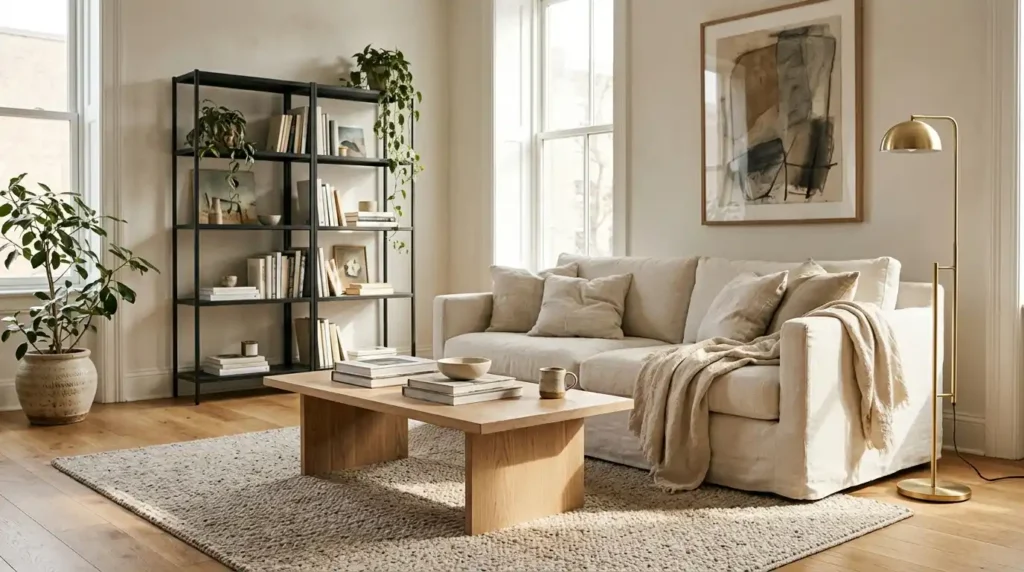
Interior design themes are easy to love one at a time, and my sister Areeba found that out the hard way last spring. She’d just rented a two-bedroom place and wanted Scandinavian and industrial together, which sounded totally reasonable to both of us. A few weeks in, her living room looked like two apartments forced to share a wall. I figured the fix was better furniture, and I was wrong about that. The room needed repetition. Nothing in it showed up twice. I noticed that the second time I walked in, and it bugged me for days. So this guide covers which styles pair well and five rules for blending them. It also covers the frustrations that trip people up and how to keep a mixed room healthy and easy to sell.
Interior Design Themes Worth Mixing: Which Styles Pair Well
Some styles already speak the same language, so I’d start there. Scandinavian and Japanese design both like pale wood and plain lines, which is why Japandi feels easy. I helped a friend try it once and it took one afternoon. Modern farmhouse and coastal share whites and natural texture. Mid-century modern fits almost anywhere, since the shapes are simple and the wood runs warm.
Opposites can work too, like industrial with cottage. They just take more planning than I expected. Areeba’s pairing sat somewhere in the middle. Check what the home already gives you before you pick, because windows, floors and layout push toward certain styles whether you like it or not.
What are the most popular interior design themes right now?
Search results keep surfacing modern, Scandinavian, Japandi, farmhouse, mid-century modern, coastal, bohemian, industrial and transitional. Quiet luxury, warm minimalism and organic modern are the newer names. For mixing interior design themes, I’d start with transitional. It already blends traditional shapes with modern restraint, and I’ve watched it absorb odd pieces without a fuss. Trend names come and go. The windows and floors stay put, so I plan around those.
Which themes work best in small apartments and rentals?
Scandinavian, Japandi and a lighter boho work best here. They rely on pieces you can carry out the door. Her lease banned drilling. We stuck removable wallpaper on one wall and rolled out a big jute rug. I think the whole thing cost her about sixty dollars.Furniture that does two jobs and storage that hides things matter more in a small space than any theme label does. And a good lamp never cost anybody a deposit.
5 Rules to Mix Interior Design Themes Without a Mess
Think of mixing as editing. You’re not collecting. Each rule below limits how much can change at once, because a room feels chaotic when everything shifts together. I keep one thing fixed, usually the palette or the main material. Everything else can wander a little. This matters more in open plans, where the kitchen, dining area and living room all share sightlines.. When Areeba finally asked for help I gave her these in order, and her room turned out to need about three of them. A small project may only need the first. Bigger rooms want all five.
Rule 1: What is the best way to split two themes in one room?
Let one theme win. A 70/30 split is a decent place to start, and Areeba gave Scandinavian the walls, sofa and rug while industrial got a black steel shelf and one metal floor lamp, nothing more. I’d assumed equal weight would look balanced, which was a bad guess, because two themes at the same volume just talk over each other. Pick the winner before you buy anything. I skipped that step in my own place once and ended up returning a sofa..
Rule 2: How do you build a shared color palette?
Pick three or four colors. Let them run through every theme. Check undertones first. Her warm white wall looked off beside a cool gray sofa, even though both count as neutrals. We taped up paint samples, and I looked at them at breakfast and again after dark. Light turned out to matter too, and I hadn’t thought about that before. The Department of Energy’s lighting guide recommends 2700 to 3600 K for most indoor lighting. It calls warm light the better fit for living spaces.. She had one 5000 K bulb in a corner lamp that turned the wall a kind of hospital blue, and swapping every bulb to match fixed it in about ten minutes.
Rule 3: Which materials and finishes should repeat?
Repeat at least two materials in every space. I like one wood tone and one metal finish. A linen or wool textile can repeat across rooms. Her oak coffee table was warm. The gray shelf beside it clashed every single day, and she finally gave it away. Brass hardware in the kitchen should echo a brass lamp in the living room. When it does, the mix reads as intentional.
Rule 4: How do you balance scale and visual weight?
Visual weight matters more than style labels. Her chunky steel shelf made a slim mid-century chair look shaky. We moved the shelf next to the heavier sofa, and the chair stopped looking lost right away. The sofa, bed or dining table sets the scale. Everything else answers to it. I leave about a walkway’s width between big pieces, and I’ve never regretted the extra space.
Rule 5: When should you stop adding?
Stop when each object has some air around it. Edit first. If that’s hard, remove the last thing you placed before you photograph the room. Areeba pulled about a third of her decor. She said the apartment felt bigger. I didn’t expect that.. Every theme needs some emptiness, even maximalism, which in my view still wants a few quiet surfaces.
Common Problems With Mixed Interior Design Themes and How to Fix Each One
The frustrations around style tend to repeat, and Areeba hit most of them. She felt buried in inspiration images, she worried the room looked like a showroom, and she wasn’t sure a rental could ever feel like hers. Her cat had opinions about the upholstery too. I’m pulling these problems from how people search and ask questions, so treat the fixes as practical advice and not survey results. People praise the opposite things as well, like calm rooms and pieces that last. Here are four problems and what I’d do about each.
Why is it so hard to commit to one style?
Too much inspiration wears you out. Areeba had something like four hundred saved images and still couldn’t choose a rug. I had her cut the board to ten and write three words, warm, calm and natural, and anything that didn’t fit those words left. Then she bought one anchor piece and lived with it for a week .That worked. Once something real sat in the room, she knew what she liked.
Why does my room look like a showroom?
Rooms look like showrooms when everything was bought together.. I asked Areeba what she already owned with a story behind it, and she mentioned her grandmother’s brass tray. It ended up on the coffee table and did more than anything she’d bought new. I leave one shelf a little messy on purpose. Mine is a pile of paperbacks and a chipped mug. It makes the room feel warm, and I’ll take warm over perfect.
How do you mix themes in a rental?
Start with textiles and lighting. A lease can’t touch those. Removable wallpaper and peel-and-stick tile add pattern without damage. Layered rugs help too. No-drill hooks and tension rods handle shelves and curtains where the lease allows it. Lock the palette first. Once Areeba’s colors were fixed she could mix furniture styles freely, because the colors were doing the unifying.
What if my theme isn’t pet or kid friendly?
Keep the look and swap the fabric. Her cat shredded a bouclé chair in about a month, and I felt a little guilty for suggesting it. Performance fabrics shrug off spills. Washable rugs survive muddy paws, and matte or satin paint scrubs clean. Bouclé and linen look great in low-traffic rooms. Elsewhere I’d pick a performance-treated version.
Keeping a Mixed Look Healthy, Durable and Easy to Resell
A mixed look has to survive more than a photo. It needs to feel good to live in. It has to hold up to wear. A future buyer should be able to make sense of it too. Many guides to interior design themes stop at color and furniture. That skips the parts you notice every day. Areeba only cared about air quality after a fresh paint smell hung around her place for most of a week. None of this fights style, thankfully. Healthy materials, tough finishes and neutral anchors fit almost any theme.
Which materials keep a mixed look healthy?
Choose low-VOC paint and natural fibers, and ventilate well. EPA’s guide to volatile organic compounds says concentrations of many VOCs run up to ten times higher indoors than outdoors. It lists paints and varnishes among the sources. That number surprised me. Areeba opens windows now while she paints. She lets new furniture air out before it goes near the bedroom. Natural wood, wool, cotton and linen suit nearly every theme. They also work as the repeating materials from rule three.
Does your theme affect resale value?
Bold themes can narrow your pool of buyers. Keep the big fixed features neutral. Paint, flooring, cabinets and tile cost a lot to change. Furniture, art and lamps leave with you. Areeba rents, so moving her personality into those movable pieces is basically her whole strategy. I wouldn’t give up a style you love for a future buyer. Keep it movable. That solves most of it..
How do you refresh a mixed look each season?
Swap textiles and accessories. Leave the anchors alone. New pillow covers and a throw take about an afternoon, and a vase or two finishes the job. I rotate art out of storage every few months. It costs little and keeps rooms from going stale. It also lets you test an idea before you commit to paint or a big purchase.
Conclusion
Interior design themes mix well when you plan the overlap. Pick a dominant theme and share a palette. Repeat two materials and match visual weight. Edit before you add. Then handle the practical problems early, like rental limits or a cat with a taste for bouclé. Choose healthy, durable materials so the room lasts. I’d start with one room and one rule this weekend. Areeba did. Her living room is the one she keeps photographing now.
FAQs
What is the difference between Japandi and minimalism?
Minimalism strips a room down to essentials, while Japandi blends Japanese and Scandinavian design with warmer wood, softer textures and more handmade objects. I thought they were the same thing until I put photos side by side, and Japandi just feels cozier.
How do I find my decor style?
Save about ten images of rooms you love and write down the words that keep repeating, like warm, airy or textured. That’s how Areeba figured hers out, and it worked better than any quiz she tried. Test the result with one anchor piece before redoing the whole room.
How many themes can I mix in one room?
Two is my limit, with one clearly dominant. A third can show up as a single accent, like a vintage rug or a sculptural lamp. Areeba added a third theme once and took it out within a week.
What is the cheapest way to change a room’s theme?
Start with paint, textiles, lighting and art, since they change the mood without new furniture. Thrifted pieces help too. I’d repaint first, then add one statement piece.