
- Automated coverings can help manage daylight, glare, privacy, and direct solar heat.
- Each room may need a different material, opacity, and operating schedule.
- Schedules and sensors can make repeated adjustments easier to manage.
- Window direction, glass type, room use, and installation details affect results.
- Power options, safety, maintenance, and manual operation should be considered before purchase.
In Bowling Green, Kentucky, window coverings can influence much more than a room’s appearance. They affect glare on screens, privacy after dark, daylight levels, and how comfortable rooms feel when direct sun reaches the glass. Automated options enable consistent adjustment of coverings without making the same manual changes every day.
For homeowners comparing motorized shades and screens, the most useful starting point is not the control technology itself. It is identifying the problem a window treatment needs to solve, such as harsh afternoon light, difficult-to-reach windows, nighttime privacy, or a patio that receives too much direct sun.
Daily Comfort and Window Direction
Windows facing different directions receive sunlight at different times, so a single solution rarely fits an entire house. East-facing bedrooms may need help with early morning brightness. West-facing living rooms and offices can experience low-angle afternoon glare. South-facing windows may need flexible daylight control, while north-facing windows often place greater emphasis on privacy than heat management.
Among home remodeling products, light-filtering fabrics can soften daylight while keeping a room feeling bright. Room-darkening and blackout materials suit spaces where sleep or media viewing comes first. Cellular shades add an insulating layer at the window, while solar fabrics are a popular choice when both views and glare control matter.
What Automation Adds
Automated controls can be part of broader home remodeling plans when a project focuses on making rooms easier to use rather than simply changing their appearance. Depending on the system, operation may use a remote, wall control, mobile app, timer, voice command, or sensor.
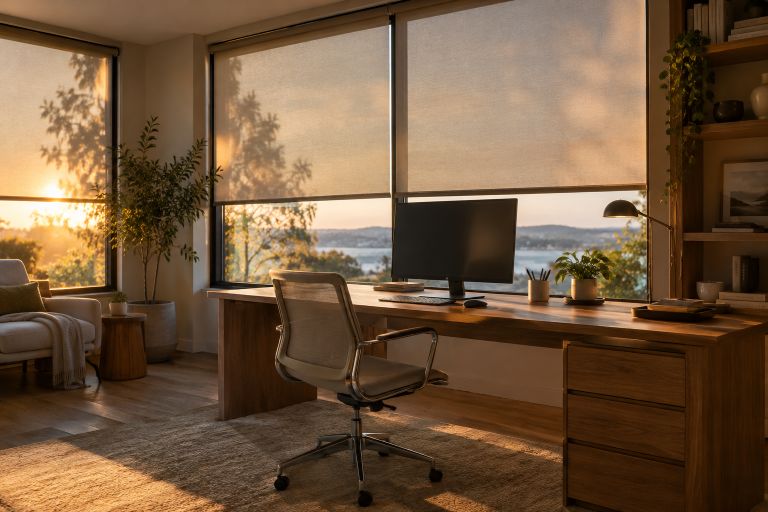
The practical benefit is consistency. A home office shade can close before direct light reaches a monitor, or bedroom coverings can open on a morning schedule. Automation is especially useful for wide, tall, or otherwise hard-to-reach windows, where manual adjustments may be inconvenient enough to be skipped.
A Room-by-Room Planning Guide
Living Rooms and Family Rooms
These spaces often need a balance of view preservation, daytime glare reduction, and evening privacy. Layered coverings can be useful when a lighter material is preferred during the day, and more complete coverage is wanted at night.
Bedrooms
Darkness, privacy, and quiet operation are central considerations. People who work overnight shifts or are sensitive to early daylight may prefer blackout materials. A gradual morning opening schedule can be more comfortable than an abrupt change from darkness to full light.
Home Offices
Screen reflections should guide the choice. The goal is usually to diffuse direct sun without turning the office into a dark space. Controls should be readily available for quick adjustments before video calls. Still, it’s computer work.
Kitchens and Dining Areas
Easy-to-clean materials are important in areas exposed to moisture, food preparation, and frequent use. Coverings should also be positioned appropriately around heat-producing appliances and nearby work surfaces.
Energy Use and Smart Schedules
Window coverings do not replace efficient windows, insulation, air sealing, or HVAC maintenance. They can, however, support a comfort strategy by limiting direct sun before it heats a room and by allowing useful daylight when glare is not a concern.
An Illinois Tech study of automated insulating window shades found reduced energy use in a commercial office setting, but its results should not be treated as a guaranteed outcome for every Bowling Green home. Residential performance varies with window size, glass type, fabric, building design, local weather, and occupant use of controls.
A sensible schedule may close a covering before intense sun arrives, keep it open when daylight is welcome, and change with the seasons. Reviewing comfort over several weeks is more useful than applying one schedule to every room.
Privacy, Glare, and Interior Protection
Privacy has a daytime and nighttime component. A sheer or open-weave fabric may reduce daytime views into a home, yet provide limited privacy after dark when interior lights are on. Bedrooms, bathrooms, and street-facing rooms often need a more opaque option or a second layer for nighttime use.
Reducing direct sunlight can also make televisions and monitors easier to see and limit prolonged exposure of flooring, fabrics, artwork, and furnishings to bright sunlight. The appropriate level of openness depends on whether the priority is a clear view, filtered light, or stronger coverage.
Outdoor Screens and Patio Planning
Exterior screens can make patios, porches, and other outdoor spaces more usable by reducing direct sunlight and helping create a boundary against insects in appropriate settings. Before choosing an outdoor system, consider wind exposure, drainage, mounting surfaces, fabric durability, and how the screen will be secured when not in use.
Power, Safety, and Installation
Power planning should happen before installation. Systems may rely on replaceable batteries, low-voltage wiring, a standard electrical connection, or solar-assisted charging. Homeowners should also ask whether controls can work without an internet connection and whether a manual option is available during a power outage.
Safety deserves equal attention. The federal safety standard for custom window-covering cords reflects the risk that accessible cords pose to young children. Cordless designs can reduce this concern, while controls, batteries, and charging components should still be located thoughtfully.
Planning Checklist and FAQs
- Measure the opening and identify the available mounting surface.
- Note when direct sunlight is strongest at each window.
- Choose the primary need: privacy, darkness, glare control, heat management, or convenience.
- Compare light-filtering, room-darkening, blackout, and screen materials.
- Confirm power access, battery maintenance, and smart-home compatibility.
- Review safety features, future service access, and manual operation.
Are automated window coverings worth considering?
They may be useful when they solve a repeated daily problem, particularly at hard-to-reach windows or in rooms with frequent glare, strong sun, or scheduled privacy needs.
Can automated shades make a room cooler?
Closing a covering before direct sunlight enters may reduce solar heat in the room. The result depends on the window, fabric, orientation, and the home’s overall construction.
Do automated coverings work during a power outage?
That depends on the power source and product design. Battery-powered systems may continue to operate, while wired systems may require backup power or a manual method.