
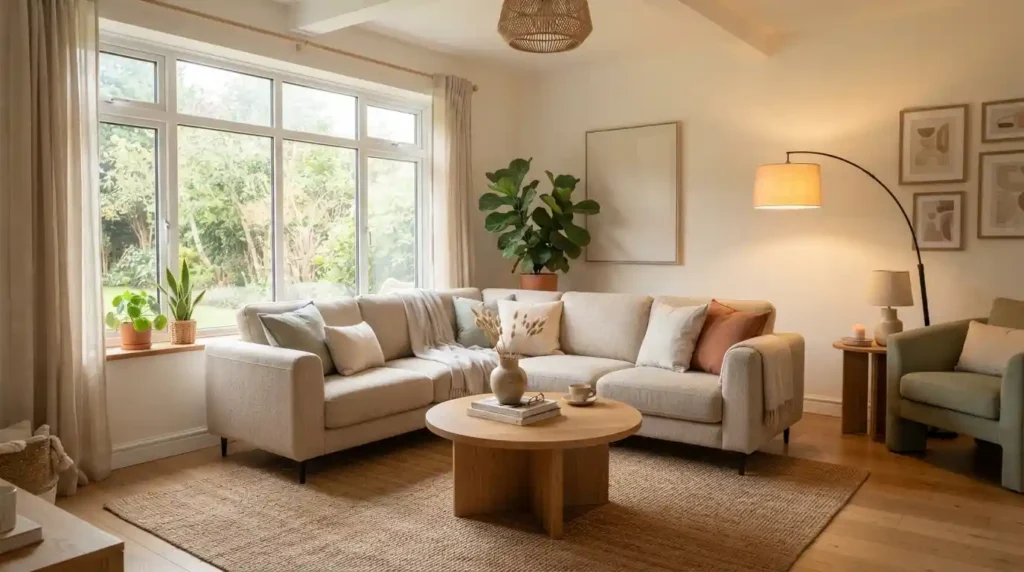
I redecorated my living room three times. Nice furniture. Decent color. Still looked like a showroom nobody actually lived in. Turned out I was skipping the boring stuff. Proportion. Walkway width. Layering light instead of flipping one switch and calling it done. This is the interior decoration advice MintPalDecor keeps coming back to. The unglamorous rules that actually make a room work. Seven of them here. The ones I wish someone handed me before I bought a single throw pillow.
Why Most Rooms Feel “Off” Even With Good Furniture
Here’s the thing nobody tells you when you start decorating. Good furniture doesn’t save a bad layout. Learned this the expensive way. Bought a beautiful sofa. Ended up eight inches too close to my coffee table. Technically fine on paper. Felt cramped every time I sat down. The furniture wasn’t the problem. The spacing was.
Most rooms that feel wrong aren’t missing style. They’re missing proportion and flow. A sofa covering an entire wall looks heavy, not intentional. A rug too small under a dining table makes everything float, disconnected from the furniture on top of it. These are measurable problems. Not vague taste stuff. That’s actually good news. You can fix measurements. Taste takes a lot longer.
What’s the biggest mistake people make when decorating a room?
Buying furniture before measuring the space first. I did this exact thing with a storage bed. Looked perfect online. Left almost no walkway on either side once it showed up. Measure first, always. Leave at least 36 inches for a main walkway. Closer to 42 or 48 inches anywhere people pass through a lot, like a hallway into a kitchen.
Color Rules That Actually Hold Up
Color advice gets complicated fast if you let it. I keep it simple now. Three colors per room, max. One dominant, one secondary, one accent. That’s the whole system, really.
How many colors should I use in one room?
Three, following roughly a 60-30-10 split. Sixty percent dominant, your walls or biggest furniture piece. Thirty percent secondary, curtains or a rug. Ten percent accent, cushions and small decor you can swap out cheap. I ignored this completely in my first apartment. Four different colors fighting each other, basically. Looked like four people decorated it and never once talked to each other.
Neutral bases still win for a reason. Beige, soft gray, warm white. They let you swap accents without repainting anything. I swapped my cushions from mustard to deep green one fall. Whole room felt different. Forty bucks, tops. Way cheaper than repainting a wall, and just as noticeable honestly.
Lighting Layers Most People Skip Entirely
This is the piece of interior decoration advice MintPalDecor gets asked about constantly. Also the one people skip most. One overhead light isn’t lighting. It’s just illumination. Flat, a little harsh, once the sun goes down and you’re stuck under one bulb all evening.
Three layers actually work. Ambient for general brightness, usually your ceiling fixture. Task lighting for reading or cooking, think a lamp by the chair, a light under the kitchen cabinets. Accent for mood, a floor lamp in the corner, an LED strip behind a shelf. I added one lamp to my reading corner last year. Room went from clinical to cozy. Ten minutes, that’s it.
How many light sources does a room actually need?
Three, minimum, for most rooms. One from each layer. A small bedroom can get by with two. A living room or kitchen really needs all three. Skip one, and you’re left with harsh shadows and a flat glow making everything look the same tired shade.
Furniture Arrangement Nobody Explains Properly
Furniture placement isn’t really about style. It’s about how people actually move through a room. Which is exactly why most decorating advice online misses it, style first, function dead last.
Leave six to eight inches of bare floor around a rug. Not shoved wall to wall. Not floating with zero relationship to the furniture near it. Keep seating close, within about eight feet, close enough that nobody’s raising their voice across the room. Between the coffee table and the sofa? Fourteen to eighteen inches. Room for knees and feet, not so much space it feels like two separate zones.
What’s a good rule for arranging a living room?
Pick one focal point. A fireplace. A window. A television. Then face seating toward it, or angle it that way. I moved my own setup around the window instead of the TV a few months back. Whole room changed during the day. Brighter. More open. Less like a room built for one thing.
Mixing Textures and Styles Without It Looking Chaotic
Mixing wood, fabric, and metal feels risky at first. Not if you do it with intention, instead of grabbing whatever looks nice off a shelf. Pick one dominant style. Let everything else back it up, not compete with it.
Metal finishes especially. Keep one dominant finish covering most of your metal accents, roughly 60 to 70 percent. One secondary finish for the rest. Brass, chrome, matte black, all in one room? Reads as unplanned, no matter how nice each piece looks by itself. I made exactly this mistake early on. Brass lamp, chrome shelf, black curtain rod. Looked like clutter until I swapped two pieces to actually match.
Conclusion
Good interior decoration advice from MintPalDecor comes down to boring, measurable things. Proportion. Spacing. Three colors. Three light layers. One dominant metal finish. Style matters less than people think once the basics are right. Fix the walkways and the lighting first. The rest gets a lot easier once a room actually functions, not just looks good in one photo from one angle.
FAQs
How do I start decorating a room from scratch?
Measure the space and rough out a layout before buying anything. Figure out walkways, a focal point, and a simple three-color palette first. Shop with those constraints already decided, not the other way around.
What’s the easiest way to make a small room look bigger?
Use lighter, neutral wall colors and keep furniture scaled to the room, not oversized. Mirrors placed opposite a window also bounce natural light around, making a small room feel more open than it actually is.
How much should I spend on decorating one room?
Depends on the room and what you already own, but a budget refresh, paint, cushions, one new light, can run under $200 and still change how a room feels. A full furniture overhaul obviously costs a lot more.
Do I need a professional interior designer, or can I do this myself?
Most people can handle a room refresh themselves with basic proportion and color rules, no professional needed for that. A designer’s worth it for structural changes, custom furniture, or when you just don’t have time to plan it yourself.