
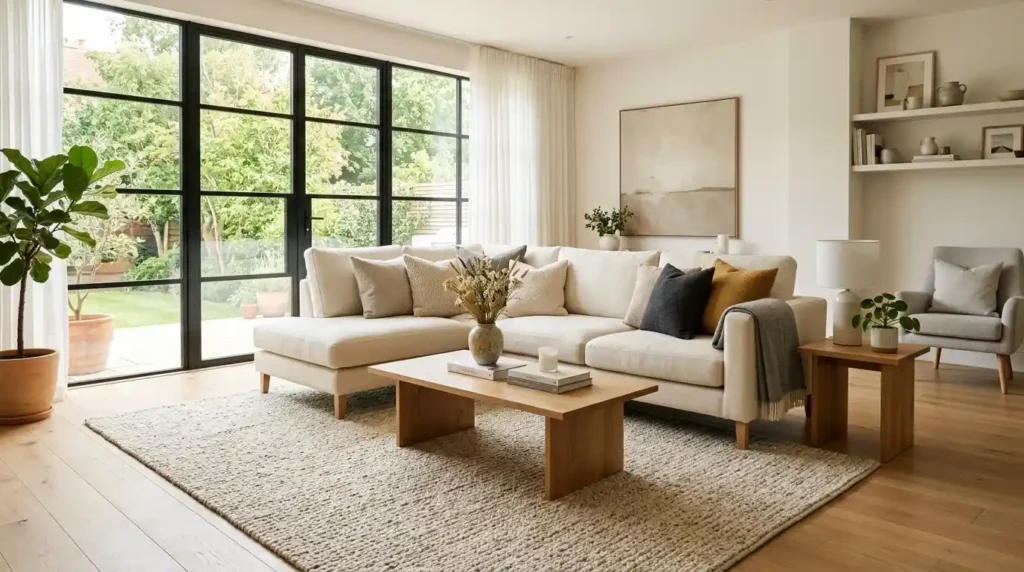
Measured a client’s living room last spring, told her the eight-by-ten she already owned was two sizes too small for the space. Didn’t believe me until we laid it out and watched it float in the middle of the room like an island. Happens constantly, this exact scenario. Home decorator rugs get picked on color and pattern first, size almost as an afterthought, and that’s backwards, plain and simple. Size decides whether a room feels grounded before anyone even clocks the pattern. Going through the sizing rules that actually matter below, materials that hold up to real life, and the one mistake nearly everyone makes on their first rug purchase.
Why Rug Size Matters More Than Color or Pattern
People obsess over color swatches, skip the tape measure entirely, and honestly I get it, color’s the fun part of shopping. A gorgeous rug in the wrong size just looks wrong though, no matter how nice the pattern is up close. Rule I use constantly, drilled into me from years of getting it wrong myself early on: at minimum the front legs of every major seating piece need to sit on the rug. Sofa, armchairs, whatever’s anchoring the room. Front legs on, back legs can float if space is tight.
Undersized’s the mistake I see most, and it’s not close. A rug that only fits under the coffee table, floating with bare floor all around it, that shrinks a room instead of grounding it. I’d rather see someone size up, go slightly over budget even, than land two sizes too small just chasing a lower price tag.
Big enough for what, exactly, in a living room? At minimum, the front legs of your main seating pieces landing on it, which in most living rooms works out to something in the eight-by-ten or nine-by-twelve range, give or take depending on the room’s overall footprint. Smaller apartments can drop to a six-by-nine and still look intentional. Go smaller than that in a real living room, though, and it reads as an accident every time, not a choice anyone made on purpose.
Getting Rug Placement Right in the Dining Room and Bedroom
Dining rooms run on a completely different rule than living rooms, and mixing the two up trips people constantly. Need enough rug that chairs stay on it even when someone pulls back from the table to stand. Pull a chair too far off an undersized rug and it catches the edge, tips, and now someone’s spilling wine on the floor instead of the rug. Measure your table plus roughly two feet of clearance on all sides, minimum, before you buy anything.
Bedrooms are more forgiving, there’s genuinely more than one right answer depending on the look you’re after. Full coverage under the whole frame works in bigger rooms. A runner on each side of the bed does the job fine in smaller ones, and it’s actually what I recommend most often for anyone watching their budget, less square footage, less money spent.
What size, then, for a queen or king bed specifically? Queen, look for roughly an eight-by-ten so the rug extends at least eighteen inches past the sides and foot of the bed. King needs closer to nine-by-twelve for that same buffer around the mattress edges. Skip that buffer and the bed just swallows the rug whole, barely visible at all.
Choosing Materials That Survive Real Life
Wool’s still the gold standard, and I tell most clients this upfront even knowing it costs more than the synthetic alternatives sitting right next to it. Resists stains reasonably well. Holds color for years without fading out. Feels better underfoot than almost anything else on the market, honestly, once you’ve walked on a good wool rug barefoot it’s hard to go back. Price is the trade-off, and it does shed a bit in the first few months, something that catches people off guard when nobody warns them beforehand.
Jute and sisal bring real texture into a room but wear rougher against bare feet, better suited to lower-traffic spaces or layered underneath something softer rather than standing alone in a high-use room. Washable rugs have come a long way the last few years, Ruggable built basically a whole product category around exactly this idea, and for a household with kids or a dog shedding everywhere, that’s genuinely where I point people first now, before wool, before anything else.
Does washable actually hold up as well as wool over the long haul? Not quite, wool still wins on how it ages across a decade of real use. But washable solves a problem wool just doesn’t, actual machine-washable stain removal, which matters a lot more day to day than theoretical ten-year durability if there’s a toddler or a muddy dog tracking through the living room every week.
Where to Actually Shop for Home Decorator Rugs
Big-box retailers, The Home Depot’s Home Decorators Collection especially, cover the affordable end well. Decent quality, wide selection, fast shipping, good for someone who needs a rug this week rather than in six. Designer sources like Loloi, Surya, or Jaipur Living step things up a level, better craftsmanship, more original pattern work, though the price jump is real and worth budgeting for ahead of time.
Custom and bespoke makers sit at the top entirely, hand-knotted pieces built to an exact size for a room with awkward proportions, sometimes commissioned straight from original artwork. Turnaround stretches longer, several weeks to a few months depending on who’s making it, pricing reflecting all that labor. Worth it for a genuinely irregular space, or a piece meant to stay in a forever home. Overkill, honestly, for a starter apartment someone’s planning to leave in two years anyway.
Conclusion
Getting home decorator rugs right comes down to size first, material second, pattern trailing a distant third, in that order every single time I’ve dealt with it. Measure the room before falling for a color. Size up rather than down when caught between two options. Pick a material matching how the room actually gets used, not just how the swatch looks under showroom lighting. Nail those fundamentals and the styling part genuinely handles itself from there.
FAQs
What size rug should I buy for a small living room?
A six-by-nine rug usually works for smaller living rooms, as long as the front legs of your main seating pieces still land on it. Going any smaller tends to look like an oversight rather than an intentional design choice.
Do washable rugs actually hold up well over time?
Yes, for households with kids or pets, washable rugs are a practical choice since stains come out in a regular wash cycle rather than requiring professional cleaning. They don’t quite match wool’s long-term durability over a decade, but the easy maintenance often outweighs that trade-off for busy households.
How much should I spend on a good area rug?
Budget-friendly options from retailers like Home Decorators Collection can run under two hundred dollars for a solid living room size, while designer or hand-knotted pieces can run well into four figures. Match your spending to how long you plan to keep the rug and how much daily wear it’ll actually see.
Can I layer two rugs together in one room?
Yes, layering a smaller patterned rug over a larger neutral jute or sisal base is a common styling trick, especially in living rooms or reading nooks. It adds texture and visual interest without committing to one large, expensive statement rug covering the whole floor.


5 thoughts on “Home Decorator Rugs: 7 Sizing Mistakes That Ruin a Room”