
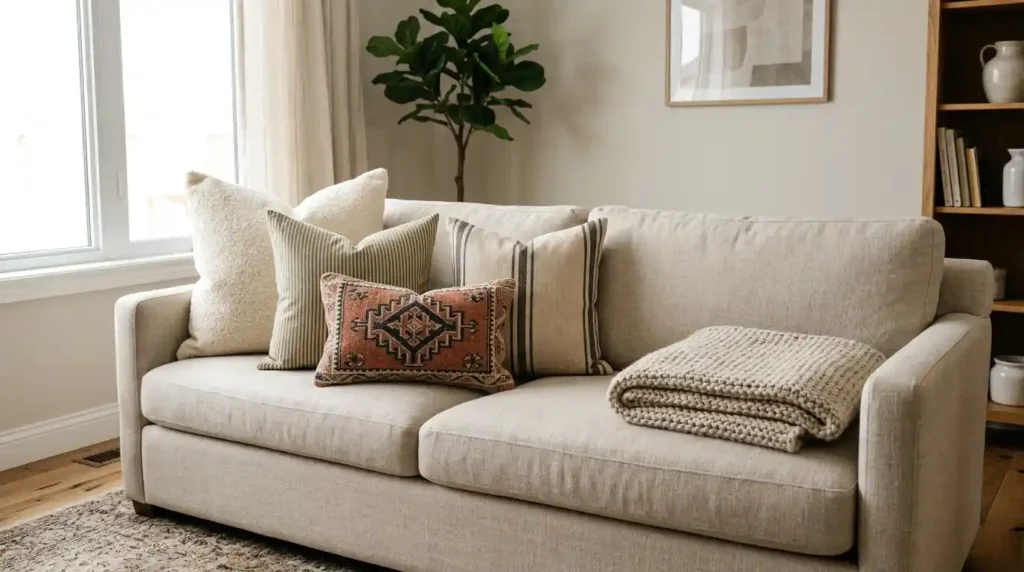
Bought four pillow covers off Wayfair last winter, gorgeous linen ones, and my couch still looked half-deflated a week later. Turns out I’d stuffed 18-inch covers with 18-inch inserts, which is basically the number one mistake behind every sad, flat sofa. Decorator pillows only look full when the insert runs bigger than the cover, usually by an inch or two. Get that wrong and no amount of fluffing saves it. This piece covers the sizing math, how many pillows a normal sofa actually needs, where to buy them without overpaying, and how to keep them looking plump past the first month.
What Are Decorator Pillows, and How Do They Differ From Regular Pillows?
Decorator pillows are for looking at, mostly. Sit on one hard enough and a cheap one caves in anyway, but a good one takes it fine. Sleeping pillows compress on purpose, your head’s supposed to sink in. Decorator ones get built stiffer, denser fill, so the corners hold their shape even after someone’s been leaning against them all through a movie. Stuff a regular bed pillow into a decorative cover and it just looks wrong. Saggy. My mother-in-law did this once with an old bed pillow shoved into a new cover, looked like a deflated cushion within a day.
Fabric-wise, anything goes, velvet, boucle, linen, corduroy. I’ve got a linen lumbar wedged between two boucle squares on my own couch right now, mostly because three identical fabrics looked flat and boring when I tried it that way first. Job’s the same regardless of fabric though. Soften the hard lines of a couch, add color without touching a paint can, give the room that finished look people pay stagers real money to fake.
Are Decorative Pillows Just for Looks, or Are They Meant to Be Used?
Both, if they’re made right, not if they’re cheap. A structured insert with reinforced corners holds up fine under actual daily lounging. The $10 polyfill kind flattens inside a month and turns purely decorative by accident, not design. Spend the extra few dollars on the insert if the couch actually gets used.
How to Choose the Right Insert Size for Decorator Pillows
Nobody explains this part clearly, and it’s the reason half the sofas I see look under-dressed. Covers get sold at one number, 18×18, 20×20, whatever’s printed on the tag. The insert shouldn’t match that number. Buy it a size up. That extra fabric tension is basically the whole secret behind the plump, hotel-lobby look designers charge a fortune to achieve. Skip it and the corners go loose, the middle caves, and no fabric on earth fixes that.
How Much Bigger Should a Pillow Insert Be Than the Cover?
Two inches bigger is the standard rule for most covers. An 18-inch cover gets a 20-inch insert, a 20-inch cover gets a 22-inch insert, and so on. Down and feather inserts can go slightly larger, closer to 2 to 3 inches over, since that fill compresses more than polyfill or foam does. Foam inserts are the exception, size those closer to the cover’s actual measurement, or the corners won’t seat right and the whole thing looks lumpy instead of full.
Lumbar covers follow the same logic but the math gets fussier since they’re rectangular. A 12×20 lumbar cover generally wants something closer to a 14×22 insert. A 14×36 cover, same idea, pair it with a 16×38. Bought a lumbar insert once that matched my cover exactly, thought I was being efficient. Sat in the middle of the couch for two months looking like a deflated balloon before I finally noticed and swapped it.
How Many Decorator Pillows Do You Actually Need for a Sofa?
Depends on the sofa, obviously, but there’s a real rule of thumb here rather than pure guesswork. A standard three-seat sofa handles five pillows comfortably without eating into usable seating space. A loveseat or small sofa does better with three. A large sectional can carry seven without looking cluttered, as long as you’re varying the sizes instead of lining up seven identical squares like dominoes.
Odd numbers read as relaxed and intentional. Even numbers read more formal, more symmetrical, which works fine in a traditional living room but can feel stiff in a casual family space. My own five-pillow setup runs two 22-inch squares in back, two 20-inch squares layered forward, and one lumbar dead center. Back-to-front, largest in the rear, smallest up front. Sounds fussy written out, takes about thirty seconds once you’ve actually done it.
What Is the 60-30-10 Rule for Pillow Colors?
It’s just a ratio, nothing complicated. Sixty percent solid or barely-there texture, thirty percent a medium pattern, ten percent one loud thing. Mine breaks down as two solid boucle squares, two muted-stripe pillows, one small bold lumbar shoved in the middle. Ignore the ratio and mixed patterns start fighting each other, which is basically what happened the first time I tried three different prints with no solids to break them up.
Where to Buy Decorator Pillows (and What They Actually Cost)
Pricing’s all over the place, honestly, and a $15 cover next to a $100 one isn’t always about quality. Sometimes it’s just brand markup, plain and simple. Budget covers from places like Bealls or TJ Maxx run $20 to $40 typically, and I’ve had good luck with a couple from Bealls that looked identical to a $75 Crate & Barrel version once stuffed. Designer or showroom brands, Pottery Barn, Z Gallerie, that range, run $75 to $200-plus, mostly for fabric quality and stitching detail you’ll notice within arm’s reach but not from across a room.
Inserts are where I’d actually spend the money rather than the cover. A cheap $10 polyfill insert flattens inside a year of regular use. A denser insert, or a feather-down blend, holds shape years longer and can move between covers as your color scheme changes. Buy one solid insert, swap cheap covers over it twice a year. Cheapest refresh trick I know, and it works.
Are Expensive Decorator Pillows Worth It Over Budget Ones?
Sometimes, but rarely for the reason you’d think. The fabric itself barely justifies the jump most of the time, a $30 linen and a $90 linen usually feel about the same in your hand. What you’re actually paying for up top is construction, a hidden zipper instead of a visible one, piping that holds its line instead of curling after a wash. Tight budget, spend it on the insert. Buy the cheap cover.
How to Keep Decorator Pillows Looking Full, Not Flat
Even a good insert sags eventually if nobody touches it. The fix takes about ten seconds and most people skip it entirely. Grab the pillow by two opposite corners, squeeze the middle down, then punch the top corners up into shape, the classic karate-chop look you see in every catalog photo. Do this after anyone’s been sitting on the couch, not just once a week.
Why Does My Throw Pillow Look Saggy After a Few Weeks?
Usually it’s fill compression from regular use, sometimes combined with an insert that was already too small for the cover. Fluffing daily slows this down but doesn’t reverse a genuinely undersized insert. If a pillow’s sagging within weeks of buying it new, check the sizing first before blaming the fabric or assuming the pillow’s just defective.
Conclusion
Decorator pillows look expensive mostly through sizing and arrangement, not through fancy fabric. Size the insert one to two inches past the cover. Stick to odd numbers on most sofas. Run the 60-30-10 split when mixing colors and patterns. Nail those three things and even a $25 cover from a discount bin ends up looking like it came from a showroom, mine did.
FAQs
Can I use a regular bed pillow instead of a decorative insert?
Technically yes, but it’ll look noticeably flatter and softer than a real decorative insert built for shape retention. Bed pillows compress under weight in a way decorator inserts are specifically designed to resist.
What size insert do I need for an 18×18 pillow cover?
A 20×20 insert is the standard pairing for an 18×18 cover, giving you the slight overstuff that keeps corners crisp. Going with an exact 18×18 insert usually leaves the cover looking loose and under-filled.
How many throw pillows is too many for a couch?
More than seven on a standard sofa usually starts eating into actual seating space and reads as clutter rather than styling. Five works well for most three-seat sofas, and varying the sizes matters more than the raw count.
Do down inserts last longer than polyester ones?
Generally yes, down and down-alternative inserts hold their shape and loft longer than basic polyfill, which flattens with regular use. Polyester costs less upfront but often needs replacing within a year or two of daily lounging.