
I hired a home decorator for my living room last year, and I genuinely thought I was hiring an interior designer, kept using the words interchangeably right up until she gently corrected me on our first call, said she couldn’t touch the wall between my kitchen and living room even if I begged her to. Turned out that distinction mattered way more than I expected walking in. A home decorator’s job is basically how a room looks, furniture, color, fabric, stuff you can actually see and touch, and anything involving real construction or structural changes needs a completely different professional. If you’re researching this because your space needs to look better without a full renovation, get that difference straight before you spend a single dollar.
What a Home Decorator Actually Does Day to Day
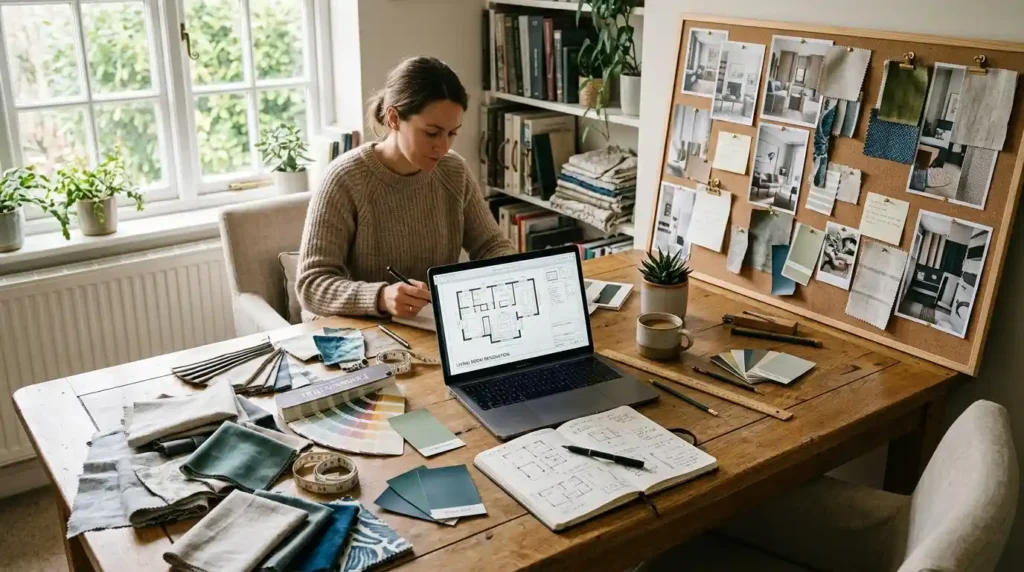
My decorator’s first visit was mostly just her walking around my living room taking notes and photos, measuring things, asking a lot of questions about how I actually use the space versus how I wanted it to look. That’s basically the job in a nutshell, she works with what’s already built and makes it look and feel right, selecting furniture and paint colors and artwork and pulling it all together into something cohesive. She put together a mood board before we bought anything, fabric swatches and paint chips and a few furniture photos, and honestly seeing it all laid out together made me realize half my original ideas didn’t actually go with each other.
Home decorators typically don’t need any formal schooling to do this work, and mine didn’t have a design degree, she’d built her business through experience and a genuinely good eye rather than a classroom. That’s a real difference from what comes next.
Is a Home Decorator the Same as an Interior Designer?
No, and the line between them trips up a lot of people including me at first. Interior designers go through formal training, usually a degree program, and they’re qualified to work on structural elements, wall placement, electrical layouts, the stuff that actually requires building code knowledge. Home decorators stick to the surface, furnishings and color and styling, and they typically charge less for it too, national salary data from sites like Zippia puts the average interior designer salary somewhere around $69,958 a year against roughly $58,245 for a home decorator, a gap that tracks with the extra training and liability designers carry.
What Hiring a Home Decorator Actually Costs
This part genuinely stressed me out before I started calling around, mostly because pricing’s all over the place depending on who you ask and what service model they’re running. A single room in design fees alone usually lands somewhere between $1,500 and $5,000, not counting the actual furniture or finishes you end up buying on top of that. Whole-home work is its own animal entirely, ten grand isn’t unusual for multiple rooms with real coordination involved, and it can climb well past $50,000 once custom pieces and a bigger footprint get factored in.
My own project landed toward the low end since it was just the one room, and honestly I was surprised how much of the quote was her actual time and expertise rather than markup tacked onto furniture, she was upfront about that split from our very first conversation.
How Much Should You Expect to Pay a Home Decorator?
Scope decides almost everything here. A straightforward bedroom or guest room might only run a few hundred dollars through an online-only service, since you’re skipping the site visits and in-person coordination that push traditional decorating costs up. A full living room redone by someone local, furniture and finishes included, can land anywhere from a couple thousand dollars to well into five figures depending on how custom you go. There’s genuinely no single number that covers it, which is honestly the most annoying part of trying to budget for this ahead of time.
Online Decorating Services Versus Hiring Someone Local
I actually looked into the online route before deciding to hire someone local, mostly out of curiosity about whether it’d save money, and it genuinely might have if my space had been simpler. Services like Havenly and Decorilla and Stuccco let you upload photos and answer a questionnaire, then a decorator puts together a design plan remotely without ever stepping into your home. Havenly’s entry-level package starts around $129 per room, which is a fraction of what an in-person consultation runs, and Stuccco charges a flat $999 per room for their standard service, cheaper than a lot of traditional full-service work.
The tradeoff is real though, nobody’s standing in your actual living room noticing how the afternoon light hits that one wall, or how your ceiling height changes what furniture proportions actually work. For a straightforward bedroom refresh that’s probably fine. For a weirdly-shaped living room like mine, having someone physically present made a real difference in the end.
Are Online Decorating Services Worth It?
For simple, well-lit rooms with standard proportions, usually yes, since you’re paying less and still getting real design expertise back. For complicated spaces, awkward layouts, unusual lighting, multiple functions crammed into one room, an in-person decorator tends to catch things a photo and a questionnaire just can’t. I’d lean online for a straightforward bedroom or guest room and local for anything with real quirks to it.
How People Actually Become Home Decorators
My decorator got into this after years of just helping friends and family redo their spaces informally, eventually turning it into a real business once word of mouth built up enough. That’s actually a pretty common path, since formal schooling isn’t required the way it is for interior design. Online courses and certificate programs exist and can genuinely help build real skills, things like color theory and space planning and how to actually put together a professional mood board, but they don’t grant the kind of professional certification that interior designers need to work on structural projects.
A strong portfolio ends up mattering more than credentials in this field, honestly. Prospective clients want to see real finished rooms, and platforms like Instagram and Houzz and Pinterest have become the main way a lot of decorators actually attract new business now, posting project photos and behind-the-scenes process shots that give people a feel for their style before ever booking a consultation.
Conclusion
Hiring a home decorator made way more sense once I understood what the role actually covers, furnishings and color and styling rather than anything structural, and once I had real cost expectations going in instead of guessing. If your space just needs to look and feel better without any walls coming down, a decorator is usually the more affordable and appropriate choice over a full interior designer. Get clear on your budget and the scope of what you actually need done before you start reaching out, it’ll save you a lot of confused first calls.
Frequently Asked Questions
What’s the difference between a home decorator and an interior designer?
A home decorator focuses on furnishings, color, and styling within a space that’s already built, while an interior designer handles structural elements and typically holds a formal degree. Decorators generally charge less and don’t need professional licensing, since their work doesn’t touch building codes or structural safety.
Do home decorators need a license or certification?
No, home decorators typically don’t need any formal license to practice, unlike interior designers who often pursue credentials like NCIDQ certification. Many decorators build their skills through experience, informal work, or shorter certificate programs rather than a full design degree.
How much does it cost to hire a home decorator for one room?
Single-room design services generally run between $1,500 and $5,000 for the design work alone, not including furniture or finishes. Online-only decorating services can cost significantly less, sometimes under $200 per room, though you lose the in-person site visit.
Is it worth hiring a home decorator instead of doing it myself?
If your space has awkward proportions, unusual lighting, or you’re struggling to make pieces feel cohesive together, a decorator’s trained eye is usually worth the cost. For a simple room with straightforward needs, a lower-cost online service or your own research might get you most of the way there.