
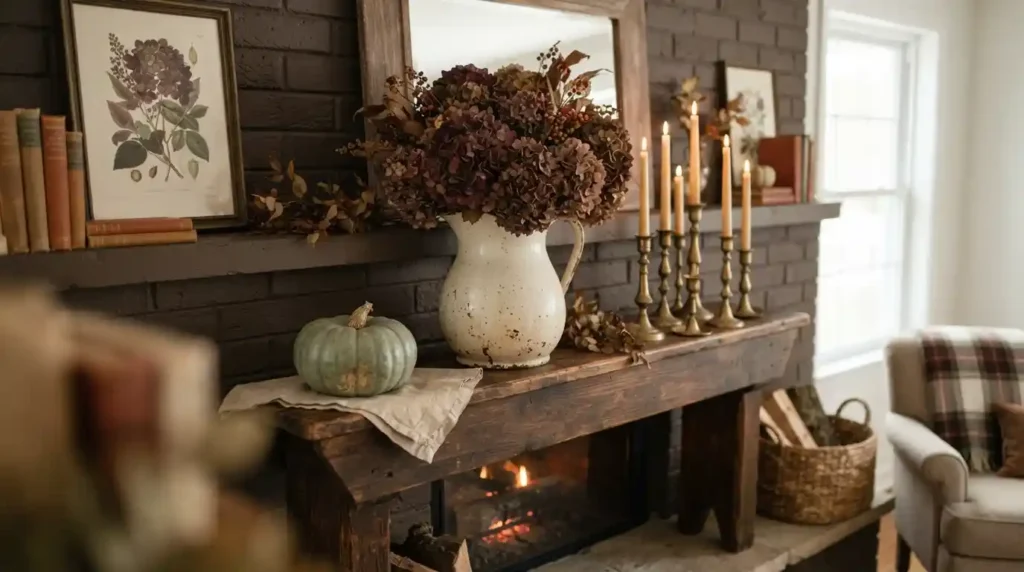
Fall antique decor trends for 2026 keep circling back to one color. Chocolate brown, cited by 33 percent of designers in 1stDibs’ ninth annual Designer Trends Survey, up from just 17 percent in 2022. That’s not a small shift. It’s nearly doubled in four years. I redid my own mantel this fall leaning into it, an old ironstone pitcher, a few dried hydrangea stems, and a thrifted frame I’d been holding onto for over a year without a plan for it. Antiques themselves are having a real moment too, not just the color palette around them. Designers using pieces from before 1920 jumped from 56 percent to 63 percent in that same survey, a genuine surge, not a rounding blip. This piece walks through what’s actually driving the shift, which pieces are worth the money, and a couple of safety notes that most fall decor roundups skip entirely.
Fall Antique Decor Trends for 2026: What’s Actually Driving Them
Two things are happening at once this year, and they reinforce each other more than people realize. Maximalism and eclecticism are the two most-requested styles among designers, 39 and 38 percent respectively, according to that same 1stDibs survey of 468 design professionals. At the same time, burgundy jumped from 7 percent to 21 percent in a single year, moving alongside chocolate brown into what the survey calls an earthy, dramatic palette. Antiques fit naturally into both trends. A collected, layered room needs pieces with real history behind them. Not a matching set bought all at once from one store. And warm, saturated colors are basically free once you own old wood, brass, or ironstone. That’s just what they look like already, no styling required. I noticed this myself once I stopped trying to match everything on my own mantel and just let the pieces sit next to each other.
What’s the top fall decor color for 2026?
Chocolate brown, by a wide margin, cited by a third of designers surveyed. Burgundy and deep olive green follow behind it, and all three share the same quality, they photograph warm rather than bright, which suits antique pieces far better than the cooler grays that dominated interiors a decade ago.
The Antique Pieces Actually Worth Buying This Fall
Not every antique category is actually worth the money. Knowing which ones hold up matters more than just chasing the trend, and I’ve bought a few pieces I regretted before I learned that. Dough bowls are everywhere in fall styling right now, and the price gap between real and reproduction is enormous. A salvaged, genuinely old dough bowl runs $25 to $70 at most estate sales or antique malls. A marked, provenance-documented antique version can run $150 or more. Transferware plates are a cheaper entry point, $6 to $25 per plate, and a gallery-style plate wall built from a mismatched set actually looks better than one that matches perfectly, in my experience. Candlesticks cluster well too, five to seven at varying heights makes a much stronger centerpiece than a single tall pair ever does.
How much should I spend on antique fall decor?
You can build a genuinely good fall vignette for well under $50 using thrifted pieces, a few dollars for a wool blanket, a dollar or two per vintage glass tumbler, nothing for dried botanicals cut from your own yard. Genuine investment pieces, a documented antique dough bowl or a large gilt frame, run higher, $75 to $250 for frames specifically, but they’re not required to get the look right.
Dried Botanicals and Heirloom Pumpkins: The Budget-Friendly Layer
This is the part almost nobody needs to spend real money on. It’s also the part that does the most visual work per dollar, in my experience anyway. Dried hydrangeas, wheat stems, pampas grass, all of it costs next to nothing if you’re cutting your own or grabbing some from a farm stand. Ten minutes of arranging and it looks intentional, not thrown together. I cut mine from a neighbor’s overgrown hydrangea bush last October, with permission, and it held up on the mantel for weeks. Heirloom pumpkins are the other easy win. The lumpy, muted-color kind, not the bright orange grocery-store version, run $4 to $20 depending on size.
How long do heirloom pumpkins actually last?
Two to three months, if you store them right. Keep them between 50 and 55 degrees. Drop below 50 and the flesh breaks down fast. That’s why a pumpkin that looked fine in October can collapse by Thanksgiving. A cold snap hits, nobody thinks to bring it in, and it’s mush by morning.
Safety Notes Nobody Mentions: Lead Paint and Moth Treatment
Most fall decor articles skip straight past two things that actually matter if you’re buying real antiques instead of new pieces styled to look old. Painted furniture from before 1978 can still have lead in the original finish. That’s when the federal ban kicked in. Doesn’t mean avoid the piece entirely, I still have a chest from the 1960s I love. Just don’t let kids chew on it, and don’t sand it without real precautions. The second thing is moths. Vintage wool textiles, blankets, quilts, anything with real wool fiber, can carry moth eggs that a quick wash won’t kill. Freezing the item at 18 degrees Fahrenheit for 24 hours does the job properly, and it’s the same method textile conservators actually recommend.
Is antique painted furniture safe to use?
Generally yes. Keep the paint intact. Don’t sand it, scrape it, or heat it, that’s what releases lead dust from a pre-1978 finish. A sealed topcoat makes it safer still, and most dealers worth buying from have already handled this if the piece was ever refinished.
Conclusion
Fall antique decor trends for 2026 point toward warmth. Chocolate brown leads the palette. Genuine history in the pieces matters more than mass-produced lookalikes ever will. None of it needs a big budget. A few dollars in dried botanicals and a couple of thrifted finds do more than people expect, and the pieces worth spending real money on, a documented dough bowl, a good gilt frame, are optional rather than required. Just handle any pre-1978 painted piece with a little care, and freeze vintage wool before it comes inside.
FAQ
What colors are trending for fall decor in 2026?
Chocolate brown leads by a wide margin, cited by 33 percent of designers in 1stDibs’ 2026 survey, followed by burgundy and deep earthy greens. All three replaced the cooler, grayer palettes that dominated interiors for much of the past decade.
Are antiques actually back in style for 2026?
Yes, genuinely. Designers using pieces from before 1920 rose from 56 percent to 63 percent year over year according to 1stDibs, while interest in 1970s pieces specifically declined in the same survey.
Is it safe to decorate with old painted furniture?
Generally yes, as long as the paint finish is intact and undisturbed. Furniture painted before the 1978 federal lead paint ban can contain lead in that original layer, so avoid sanding or scraping it without proper precautions.
How do you keep moths out of vintage textiles?
Freeze the item at 18 degrees Fahrenheit for 24 hours before bringing it into your home, which kills any moth eggs a normal wash wouldn’t catch. This is standard practice among textile conservators, not just a home remedy.