
Key Takeaways
- Pressure washing uses concentrated water force and often suits durable, hard surfaces.
- Soft washing uses low pressure with a surface-appropriate cleaning solution to address organic buildup.
- Algae, mildew-like staining, moss, and similar growth usually need more than water pressure alone.
- Using excessive pressure can etch concrete, strip paint, damage wood, loosen mortar, or force water behind siding.
- A small test area and a careful inspection should come before cleaning any large exterior surface.
Metro Atlanta homes contend with pollen, shade from mature trees, humid stretches, and frequent rain, all of which can leave exterior materials looking dull or stained. Before choosing a cleaning approach, homeowners can review the surface types commonly included in exterior house washing and consider the material’s age, condition, and visible buildup.
Pressure washing and soft washing are not interchangeable. The right choice depends less on which machine seems stronger and more on whether the method can remove the stain without harming paint, sealants, roofing, mortar, wood fibers, or siding seams.
Why The Cleaning Method Matters
Exterior materials can look solid while hiding cracked caulk, loose paint, weakened grout, open joints, or aging sealant. These weak points let water seep behind surfaces, so cleaning must be approached carefully. Water volume, spray angle, pressure, cleaning chemistry, and contact time all affect the outcome. Concrete may tolerate a controlled pressure-cleaning process, while painted siding usually calls for a gentler approach. Inspecting each surface first, then matching the method to the material, helps remove dirt without causing costly damage.
How Pressure Washing Works
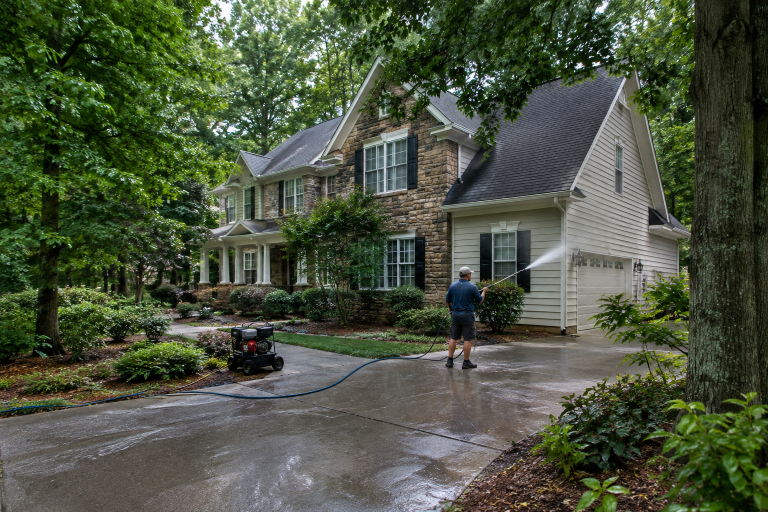
Pressure washing directs a concentrated stream of water at a surface to lift loose dirt, mud, and some stains. It can be useful on sound concrete driveways, garage floors, walkways, and certain patios or masonry surfaces. More pressure is not automatically better. Poor technique can create streaks in concrete, chip coatings, scar brick, or drive water into openings around siding and trim.
How Soft Washing Works
Soft washing relies on low-pressure application and a cleaning solution selected for the surface and soil type. A basic definition of soft washing distinguishes it from cleaning methods that rely primarily on high-pressure water. It is often considered for painted surfaces, siding, and organic discoloration, but products must be mixed, applied, and rinsed according to their labels.
Roof surfaces deserve particularly careful handling because walking, water pressure, and incorrect cleaning products can all create avoidable problems. Homeowners researching roof washing should first identify the roofing material, look for loose or damaged shingles, and check any manufacturer care guidance.
Choosing By Surface
Siding And Roofing
Vinyl, aluminum, painted wood, and fiber-cement siding require attention around seams, vents, windows, and electrical fixtures. Low pressure and a broad spray pattern help limit the chance of water intrusion. High-pressure roof cleaning can dislodge granules, disturb flashing, or damage aging materials, so roof work is usually a higher-risk task.
Brick, Concrete, Wood, And Pavers
Brick can handle limited pressure when it is in good condition, but deteriorated mortar needs special caution. Concrete is generally more durable, though improper use may leave etched lines or unevenly clean areas. Wood decks and fences can splinter or develop raised grain under excessive pressure. Pavers, natural stone, and tile also need inspection for cracked pieces, joint sand, and sealers that may have been disturbed.
Matching The Method To The Stain
- Loose soil and pollen: A rinse or controlled pressure may be sufficient.
- Grease and vehicle marks: A compatible degreaser may be needed before rinsing.
- Algae or mildew-like staining: A surface-safe treatment is often more effective than force alone.
- Rust: Use a remover designed for both the stain and the underlying material.
- Moss: Remove it carefully, then address shade, drainage, and debris that hold moisture.
Never mix cleaning chemicals unless the product instructions specifically allow it. Some stains can leave permanent discoloration even after the underlying growth or residue has been removed.
Safety Checks Before Cleaning
- Inspect for cracks, peeling paint, loose mortar, damaged caulk, and open joints.
- Cover or avoid outlets, lights, vents, doors, and windows.
- Move vehicles, furniture, toys, and décor from the work area.
- Protect plants, keep children and pets away, and use eye protection and slip-resistant footwear.
- Test a hidden area first, then stop if the surface chips, splinters, fades, or allows water inside.
When To Clean It Yourself Or Hire Help
A careful homeowner may be able to handle a small, ground-level concrete section or lightly soiled patio. Roofs, tall walls, delicate siding, extensive staining, and projects involving cleaning solutions require more planning and may be better left to trained help. Ask any provider about the proposed method, insurance, plant protection, runoff practices, and how they will protect vulnerable materials.
Simple Maintenance After Cleaning
Cleaning lasts longer when moisture and debris are managed. Trim vegetation that blocks airflow, clear gutters and downspouts, repair leaks, and check shaded walls and walkways regularly. The EPA emphasizes that moisture control is central to limiting mold growth, a principle that also supports better exterior maintenance.
Common Questions
Is Soft Washing The Same As Pressure Washing?
No. Both use water, but soft washing relies on low pressure and an appropriate cleaning solution, whereas pressure washing relies more heavily on water pressure.
Can Pressure Washing Damage Siding?
Yes. Excessive pressure or incorrect spray direction can damage paint, seals, vents, and siding joints.
How Often Should A Home Exterior Be Cleaned?
There is no single schedule for every Metro Atlanta home. Inspect surfaces periodically and address visible buildup, slippery walkways, drainage issues, and areas that remain damp.
Should A Roof Be Cleaned With A Pressure Washer?
Check the roof material and manufacturer guidance first. Because roofing is easy to damage and difficult to access safely, it requires a more cautious approach than many ground-level surfaces.
Final Thoughts
The best exterior cleaning method matches the material, stain, condition, and surrounding environment. Siding, brick, concrete, and wood each respond differently to water pressure and cleaning solutions, so a single approach rarely suits all surfaces. A thoughtful surface assessment, rather than the strongest possible setting, helps Metro Atlanta homeowners improve exterior appearance while reducing the risk of unnecessary damage, protecting both curb appeal and long-term value through careful, surface-appropriate cleaning that respects every material it touches.